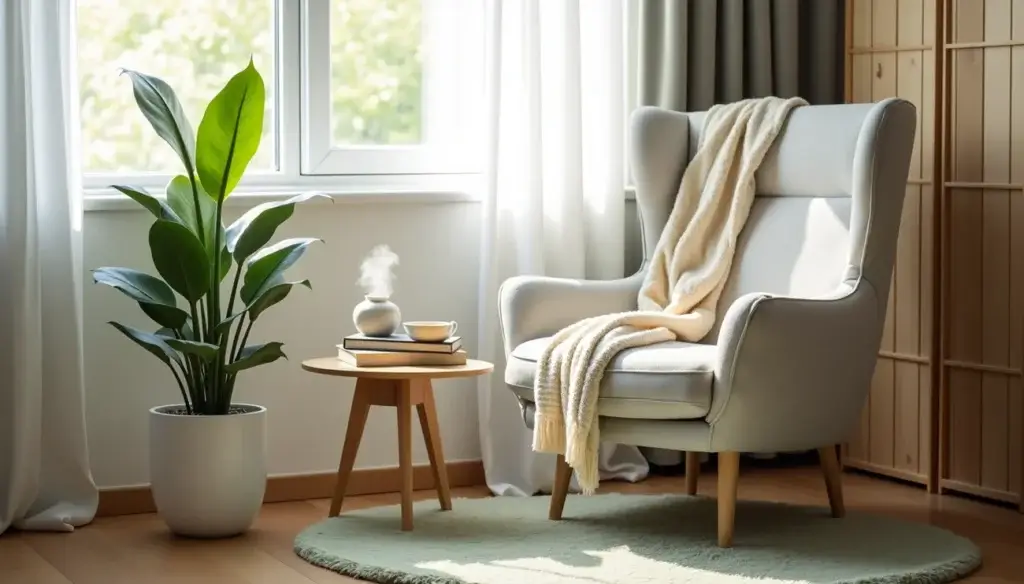
Have you ever dreamed of having an introvert comfort zone where you can truly unwind without explanation or apology? If you’re someone who recharges in solitude, as most introverts are, having a dedicated sanctuary isn’t just nice—it’s necessary.
Introverts experience spaces differently than extroverts do. We crave environments that feel safe, quiet, and private, specifically designed to match our personality and needs. In fact, introverts are particularly sensitive to their physical surroundings and need calm, peaceful spaces to restore their energy.
Whether you’re transforming your entire introvert home or carving out a small zen zone in a corner, the principle remains the same: simplicity and quiet allow you to turn inward and recharge. Research shows that incorporating natural elements can provide powerful stress-relieving effects, while calm, neutral color palettes—like soft grays, muted greens, and creamy whites—create the perfect backdrop for your introvert dream house.
Throughout this guide, you’ll discover how to design a personal refuge that honors your need for solitude and helps you recharge in a world that often demands too much of your social energy.
What Is an Introvert Comfort Zone and Why Is It Important
An introvert comfort zone represents a physical space where you feel safe, content, and at peace with your inner self. It’s not merely about physical comfort but about creating an environment that aligns with your naturally quiet tendencies and needs as an introvert.
Your Entire Home or a Designated Place in Your Home
Your introvert comfort zone can be your entire home or just a specific area within it. For many introverts, having their entire home function as a quiet retreat provides consistent relief from external stimuli. However, this isn’t possible for everyone, especially those living with family. Consequently, creating a designated “introvert zen zone” becomes essential—whether it’s a bedroom, a cozy corner, or even a transformed closet space.
Finding or creating these nurturing spaces really pays off for your mental well-being. Even a small corner by a window can serve as a perfect escape when designed with intention.
Introverts Need a Place to Recharge
Unlike extroverts who gain energy from social interactions, introverts recharge with alone time and quiet environments. This key difference is fundamental to understanding why dedicated recharging spaces are necessary, not optional.
Your comfort zone provides:
- A buffer from sensory overload and social fatigue
- Space for deep thinking and reflection
- Opportunity to process experiences and emotions
- Essential alone time that replenishes depleted energy
When introverts have access to their personal space, they experience less stress and more mental clarity—vital components for emotional health and overall happiness.
Introverts Need a Judgment-Free Place
Moreover, introverts require spaces free from the pressure to perform socially or explain their need for solitude. A judgment-free zone allows you to temporarily escape the “come out of your shell” comments and simply be.
In such spaces, the “inner critic” that often accompanies social anxiety can quiet down. No questioning what to say or do next. This release from judgment offers profound relief, allowing you to make peace with your introverted nature rather than feeling shame about it.
Where Introverts Spend Their Alone Time Should Be Nice
Since alone time is essential rather than optional for introverts, the quality of where you spend that time significantly impacts your well-being. Creating a space filled with things that bring you joy and comfort enhances the restorative quality of your alone time.
When you invest in making your introvert home comfortable and personalized, you’re not being indulgent—you’re creating a strong foundation for successfully navigating all areas of your life. The magic of a well-designed introvert dream house is that it fills your tank for those environments you can’t control, helping you show up as your best self when you do venture out.
Key Factors for Creating Your Introvert Comfort Zone
Creating your perfect introvert sanctuary starts with understanding your unique needs. Let’s explore how to design a space that truly rejuvenates you.
Understand What Comfort Means to You
Comfort is deeply personal for introverts. Since you’re sensitive to your physical environment, your space should reflect what soothes your senses specifically. Pay attention to what elements drain your energy versus what replenishes it. Additionally, consider setting an intention for your space—whether it’s for relaxation, creativity, or deep thinking—as this will guide your design choices.
Reflect On What Makes You Feel Safe and Relaxed
Take time to identify what brings you genuine peace:
- Make a short list of adjectives that describe how you want your space to feel
- Consider which textures, sounds, and visual elements help you decompress
- Think about past environments where you’ve felt most at ease
These reflections will become your design compass, ensuring your comfort zone authentically supports your introvert nature.
Visualize Your Ideal Introvert Home
Consider creating a vision board with colors and images that match the mood you want to establish. Introverts generally prefer softer color palettes with warm neutrals, gentle greens, and natural timber tones rather than high-contrast patterns or vibrant accents. These visually restful choices create the calm environment introverts crave.

Choose a Low-Traffic Area Like a Spare Room, Corner, or Closet
Select a location with minimal external noise and distractions. Ideally, your space should have some physical distance from active areas in your home. Even in studio apartments, you can designate a corner with a functional room divider or shelf to create separation. The key is finding a spot where you won’t be constantly interrupted.
Use Furniture, Dividers, or Curtains to Create Boundaries
If you’re like me and you live in a home with other people (we have a family of 6), physical boundaries are essential for creating psychological separation from busy surroundings. Communicate clearly with your people that this is your space for recharging. Remember that establishing these boundaries isn’t selfish—it’s a necessary form of self-care that enables you to show up better in all areas of your life.
Pro Tip: Engage Your Senses for Deeper Relaxation
Your introvert sanctuary becomes truly powerful when you engage all five senses. Creating a multi-sensory retreat allows for deeper relaxation and more effective recharging.
Sound: White Noise, Soft Music, or Silence
Introverts typically prefer much lower sound levels than extroverts, making noise management essential. Consider a white noise machine to mask distracting sounds or try nature recordings like rainfall, which studies show reduce stress and enhance cognitive performance. Alternatively, use noise-canceling headphones to create your own pocket of peace and quiet anywhere in your home.
Smell: Essential Oils, Candles, or Incense
Scent and emotion are tightly linked. For example, neutral odors may sound like a simple choice, but they can turn negative during stress, further aggravating anxiety. Instead, fill your zen zone with calming fragrances through diffusers, candles, or incense. Candles are my go-to! Lavender has proven relaxation benefits, while chamomile, eucalyptus, and sandalwood help ground and center you.
Touch: Soft Fabrics, Weighted Blankets
Physical comfort translates to mental ease. Incorporate plush throw pillows, microfiber couches, or velvet chairs. For many introverts, weighted blankets provide gentle pressure that tells your nervous system you’re safe, similar to swaddling a baby.
Sight: Decluttered Space, Natural Light
Maintain a clutter-free environment with soft, warm lighting. Natural light significantly improves mood and mental clarity, as opposed to harsh artificial lighting that can cause headaches.
Taste: Herbal Teas or Calming Snacks
Instead of caffeine (which increases dopamine and can heighten introvert anxiety), try calming alternatives like Rooibos tea or mint-flavored water that reset your system’s senses when you’re trying to relax. You’ll find me with a cup of hot tea in hand most days.

Maintain and Evolve Your Zen Zone
Creating your introvert sanctuary is just the beginning—maintaining it is what keeps it successful as your happy place.
Keep The Space Clutter-Free
For introverts, clutter isn’t merely untidy—it creates additional stimuli for your brain to process, leading to anxiety and distraction. A cluttered environment makes it harder to focus fully on relaxing or creative pursuits. According to research, clutter can significantly increase levels of cortisol (the stress hormone), robbing you of the very peace your zen zone was designed to provide.
Consider these clutter-control practices:
- Clear tables and countertops daily
- Implement hidden storage solutions like drawers or baskets
- Schedule brief, regular tidying sessions
Update Items As Your Needs Change
Your introvert comfort zone should evolve as you do. Periodically assess what still serves you and what doesn’t. The goal isn’t perfection or rigid minimalism (unless that’s your thing). Your space should reflect your current needs, not an unchanging ideal.
Respect The Space As Special
Treat your introvert dream house or space with the importance it deserves. Communicate boundaries clearly with roommates or family. Remember that this isn’t selfish—it’s essential maintenance for your well-being. This sacred space allows you to recharge before facing external demands again, making you more present and available when you choose to engage with the world. Without it, you risk an introvert hangover, and no one wants that. 😂
Closing Thoughts
Designing your introvert comfort zone goes beyond mere decoration—it represents an essential form of self-care. After all, your home environment significantly impacts your mental well-being and ability to process the world around you. Through thoughtful creation of a space aligned with your introvert needs, you give yourself permission to recharge without apology.
Remember that your comfort zone might evolve over time, and that’s ok. What feels restorative today might change as your circumstances shift. Therefore, regularly reassess your happy place elements and adjust accordingly. The most effective introvert spaces grow alongside you, adapting to your changing needs while maintaining that essential sense of safety and calm.
Additionally, maintaining boundaries around your space teaches others to respect your needs while reinforcing your own self-worth. This practice strengthens relationships rather than weakening them, because you show up more fully when your energy reserves allow it.
Ultimately, your introvert dream home—whether an entire home or just a cozy corner—serves as both refuge and launching pad. This carefully crafted environment not only helps you recover from social and sensory overload but also equips you with the emotional resources needed to engage meaningfully with the world.
While society may celebrate extroversion, your quiet happy place acknowledges the power and necessity of turning inward. Your introvert comfort zone thus becomes not just a physical space but a profound act of self-acceptance.